Resin inclusion: a precision technique
Including an object in acrylic resin involves embedding it in a two-component mixture — commonly known as acrylic glass or plexiglass — and then triggering its polymerisation under high pressure. This chemical reaction turns the liquid mixture into a solid, homogeneous, and remarkably transparent block. The result is a dense, stable material that is easy to machine and offers glass-like clarity.
The process requires precision. An incorrectly proportioned mixture, insufficient pressure, or an incomplete polymerisation cycle will compromise both the transparency and the structural integrity of the final block. This is why the technique demands specific expertise, appropriate equipment, and close control of the physico-chemical parameters involved.
What Mercorne can do with resin inclusion
Mercorne produces custom resin inclusions for knife makers, craft artists, and individual customers. The most common applications include:
- Including an existing object (feather, flower, wood fragment, scale, dried insect, fabric) to create a unique knife handle
- Reproducing a provided model, faithfully matching the layout and proportions of included elements
- Creating a custom block to precise specifications, incorporating defined colours, materials, and dimensions
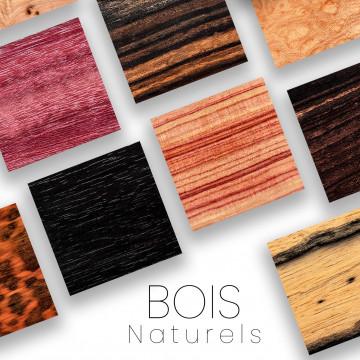
- Including noble materials from our own stock (stabilised woods, coloured resins, metallic powders) to achieve specific visual effects
The resulting acrylic block is compatible with all standard machining tools: lathes, milling machines, belt sanders. It withstands common finishing products and is dishwasher-safe, making it suitable for both table knives and kitchen knives.
Why choose Mercorne for your resin inclusion?
The quality of a resin inclusion depends entirely on the rigour of the process: mixing ratio, homogenisation, pressure build-up, and polymerisation temperature control. A failed block means an unusable material and a delayed project.
- Over 20 years of practice in this specific technique — Mercorne has mastered the parameters that make the difference between a cloudy and a crystal-clear block
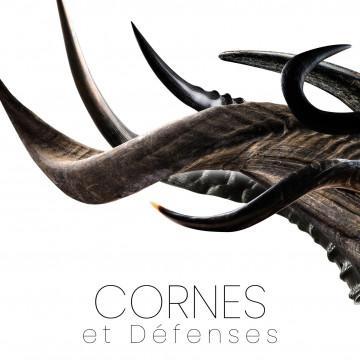
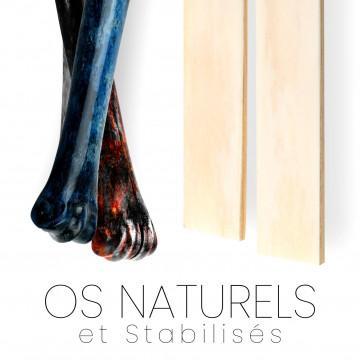
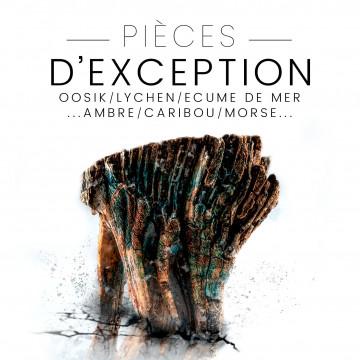
- Complementary materials available — our catalogue covers the full range of noble handle materials, allowing inclusions to be combined with other woods or materials from our stock
- Single point of contact — Benoit handles every enquiry personally, answers technical questions, and recommends the best options for each project
- Careful packaging — finished blocks are packaged to prevent any damage in transit
Mercorne and resin inclusion: 34 years of expertise
Mercorne was founded in 1992 and is based in La Monnerie-le-Montel, Puy-de-Dôme, in the heart of the French cutlery valley. We have been working with professional knife makers and craft artists for over three decades. Resin inclusion is one of the services we offer alongside our core activity of supplying noble materials — it meets the concrete need of creators who want unique handles that cannot be found in any catalogue.
For any inclusion enquiry, contact us directly: contact@mercorne.fr or +33 4 73 94 84 47. We respond to every request personally and provide a quote based on the nature and volume of the project.
Frequently asked questions about acrylic resin inclusion
What exactly is acrylic resin?
Acrylic resin is a two-component polymer that, once mixed and pressurised, forms a hard, transparent, and stable block. It is known by several names depending on the context: acrylic glass, plexiglass, or by its full chemical name, polymethyl methacrylate. Its exceptional transparency and ease of machining make it particularly well suited to handcrafted knife handles.
Can any object be included in resin?
Most natural or manufactured objects can be included, provided they can withstand the pressure and heat of the polymerisation process. Very fragile or porous materials may require prior preparation. We assess each request individually to evaluate feasibility and recommend the most appropriate process.
Is the resulting material durable over time?
Yes. A properly polymerised acrylic resin block is stable over time, resistant to common household products, and dishwasher-safe. It does not discolour and retains its transparency for many years, provided it is kept away from prolonged direct UV exposure and aggressive solvents.
How long does a custom inclusion take?
Lead time depends on the volume and complexity of the request. Contact us directly for an accurate estimate. We process each order according to the specifications provided and confirm lead times upon receipt of the enquiry.
Does the object need to be sent to Mercorne?
Yes, for a real inclusion, the object must be sent to us. We will provide the address and packaging instructions when processing your request. For reproduction requests, detailed photographs are sufficient at the quoting stage.
 French company
 Fast and careful delivery
 Exceptional products
 English
 Français
 Español
 Italiano
 Deutsch


.jpg)