No products available yet
Stay tuned! More products will be shown here as they are added.

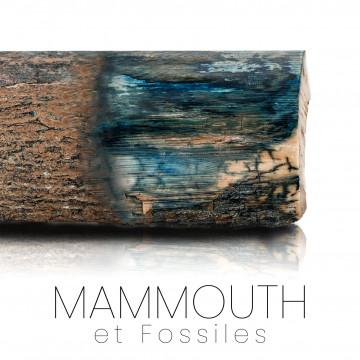
The mammoth rib (Mammuthus primigenius) is an exceptional fossil, dating back 10,000 to 40,000 years, extracted from Siberian permafrost. Stabilized in Denmark using a rigorous process that preserves the bone’s natural structure while reinforcing its strength, it offers knife makers a material that is both rare and technically reliable. Its distinctive texture—deep veins and hues ranging from ivory white to ochre beige—gives each handle a unique character that is impossible to replicate.
At Mercorne, each mammoth rib is selected for the quality of its stabilization and the integrity of its structure. Our pieces comply with CITES regulations and come with the necessary documentation. Cut to your specifications in our workshop in France, they are ideal for experienced knife makers seeking an extraordinary material for their creations. Not sure about your choice or the size? Olivier personally answers all your questions.
Stay tuned! More products will be shown here as they are added.
The woolly mammoth (Mammuthus primigenius) inhabited the cold steppes of Eurasia and North America for tens of thousands of years before becoming extinct about 4,000 years ago. Its bones, preserved in the Siberian permafrost, make up the bulk of the deposits being mined today. Mammoth ribs—large, well-preserved pieces—are extracted from these frozen soils, primarily in Siberia (Yakutia, Chukotka), under conditions strictly regulated by the international CITES agreement. Every piece offered by Mercorne comes with documentation certifying regulatory compliance.
Mammoth ribs are distinguished by a compact bone structure on the surface and a spongy core, a characteristic of large fossil bones. Its density varies depending on the piece and the degree of fossilization, but its stabilization in Denmark gives it excellent mechanical strength, moisture resistance, and sufficient dimensional stability for use as a knife handle.
Colors range from off-white to ochre beige, sometimes accented with dark brown veining or grayish hues due to partial mineralization. No two pieces are alike: the natural patterns of the fossilized bone make each handle a unique creation. The pieces often feature small natural cracks that are filled during the stabilization process—a characteristic, not a defect.
The mammoth rib offered by Mercorne is fully stabilized in Denmark through vacuum impregnation with acrylic resin. This process strengthens the bone structure, eliminates the risk of future cracking, and facilitates machining. It is worked like dense bone: using a drill bit, file, progressive-grit sandpaper, followed by polishing with wax or oil. Be sure to wear respiratory protection during machining, as with any fossilized bone.
When selecting a mammoth rib, several criteria must be considered:
Since 1992, Mercorne has been selecting exceptional materials for artisan knife makers. Mammoth ribs are part of our catalog of rare materials, chosen for their high-quality stabilization and structural integrity. All our pieces comply with CITES regulations and are shipped with the corresponding supporting documents—a non-negotiable requirement for this type of fossil material. Same-day shipping for orders placed before noon; returns accepted within 15 days; free shipping on orders of €90 or more.
Yes, provided the item is accompanied by CITES documentation certifying its legal origin. Mammoth ivory and bones (from an extinct species) are subject to regulations governing the trade in wildlife. All items sold by Mercorne comply with these regulations and are delivered with their documentation.
Mammoth ivory is extracted from the tusks, while the rib comes from the ribcage. Their bone structures differ: ivory features the characteristic chevron pattern (Schreger pattern), while the rib has a more varied texture of spongy and compact bone. Both materials are fossils, of legal origin, and subject to the same regulatory requirements.
Thanks to vacuum stabilization, the risk of cracking is significantly reduced. The resins penetrate the micropores of the fossilized bone and strengthen it from the inside. Gradual machining (low-speed cutters, fine abrasives) and a wax or oil finish ensure a result that remains stable over time.
A handle made from stabilized mammoth rib requires little maintenance. A light application of mineral oil or beeswax once or twice a year is sufficient to preserve its luster. Avoid prolonged contact with water and storing it in very dry environments, which could cause the piece to warp.
The ribs are available in standard sizes. For specific size or cutting requirements, please feel free to contact Olivier directly—he personally responds to all technical inquiries and can help you find the piece best suited to your project.
check_circle
check_circle
What are you looking for?