No products available yet
Stay tuned! More products will be shown here as they are added.

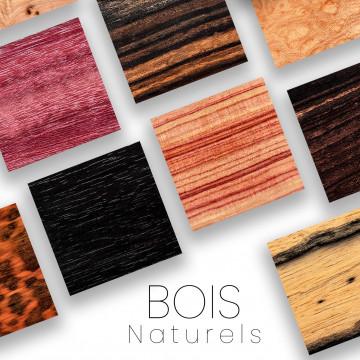
Morado (Machaerium sceleroxylon), also known as pau ferro or Santos rosewood, is an exotic wood native to Brazil, Argentina, and Paraguay. Recognizable by its reddish-brown hue with purplish highlights, it features a fine grain, high density, and excellent dimensional stability. These characteristics make it a sought-after material among knife makers for crafting handles that combine strength, durability, and striking aesthetics. Its surface naturally polishes to a silky sheen without requiring any complex treatment.
At Mercorne, morado is carefully selected to ensure consistent color and quality from one batch to the next. Our pieces are cut in our workshop in France to dimensions suitable for artisanal cutlery. With 34 years of experience in selecting premium materials, we help you choose the format best suited to your project. Olivier is available to answer any technical questions.
Stay tuned! More products will be shown here as they are added.
Morado (Machaerium sceleroxylon) is a tropical wood native to South America, primarily Brazil, Argentina, and Paraguay. Its name comes from the Spanish word “morado,” which means purple—a direct reference to the characteristic hue of freshly cut wood. It is also marketed under the names pau ferro, striped caviuna, or Santos rosewood, although it is not botanically related to the true rosewoods of the genus Dalbergia. Used for generations in the manufacture of furniture, musical instruments, and cutlery, morado has established itself as a viable alternative to more heavily regulated tropical woods, while retaining a distinctive aesthetic appeal.
Morado is a dense wood, with a density generally ranging from 0.85 to 1.00 g/cm³ [À VÉRIFIER], which gives it a noticeable solid feel and excellent wear resistance. Its Janka hardness is around 1,650 lbf [À VÉRIFIER], comparable to that of Rio rosewood, making it a challenging wood to machine but very rewarding once shaped.
The color of morado ranges from pinkish brown to dark reddish-brown, with dark streaks that create a sense of visual depth. When cut, the wood may exhibit purplish hues that gradually fade with exposure to light. Its grain is fine to medium-fine, with a generally straight grain but sometimes slightly interlocked depending on the source. The surface polishes to a high natural luster, which significantly reduces the need for finishing products.
Due to its density, morado requires sharp tools and a methodical approach during shaping. It may release irritating dust during sanding—wearing a dust mask is recommended. Gluing is effective using epoxy resins or special adhesives designed for dense woods. The wood stabilizes well over time, with minimal shrinkage once dried, making it a reliable material for knife handles that will be used in a variety of environments.
Morado is suitable for a wide range of knife-making projects, from kitchen knives to hunting knives, as well as folding knives and collector’s items. Here are a few criteria to guide your choice:
In terms of knife-making, morado is suitable for experienced craftsmen who are proficient with tools designed for hardwoods. It is not recommended as a first wood for beginners, but it is less demanding than boxwood or service tree.
Since 1992, Mercorne has been selecting and cutting premium materials for artisanal cutlery. Morado is one of the exotic woods we carry in our regular inventory, selected for the quality of its drying process and the consistency of its color. All our pieces are cut in our French workshop to dimensions tailored to the needs of both professional and amateur knife makers. Orders are shipped the same business day. Returns are accepted within 15 days. Shipping is free on orders of €90 or more. If you have any questions about choosing the right size or compatibility with your project, Olivier will respond directly.
Morado (Machaerium sceleroxylon) is not currently listed in the CITES appendices [À VÉRIFIER]. It should not be confused with rosewoods of the genus Dalbergia, which are subject to import/export restrictions. However, as with any tropical wood, it is recommended that you check the applicable customs regulations if you are ordering from outside France.
Morado is often compared to rosewood because of its similar color and density, but it belongs to a different botanical genus (Machaerium vs. Dalbergia). In practice, for cutlery, morado offers very similar qualities: fine grain, beautiful color, and good durability. It is more readily available for import and is often offered at a more affordable price.
Morado is naturally dense and low in porosity, making it relatively resistant to moisture under normal use. A light coating of linseed oil or natural wax is generally sufficient to protect it and enhance its color. For a kitchen knife subjected to repeated washing, applying epoxy resin to the sides during assembly will increase the knife’s overall durability.
Its high density makes it more difficult to work with than softer woods such as walnut or stabilized beech. It is recommended to use well-sharpened tools and a belt sander or disc sander for shaping. A beginner knife maker can certainly use it, provided they allow for more time and take precautions to ensure a safe working environment (such as wearing a mask while sanding).
Like many dense exotic woods, morado tends to darken slightly when exposed to light and air. The purplish hues visible on a fresh cut fade, giving way to a warm, deep brown. This aging is generally viewed positively by knife makers, as it accentuates the handle’s natural character.
check_circle
check_circle
What are you looking for?